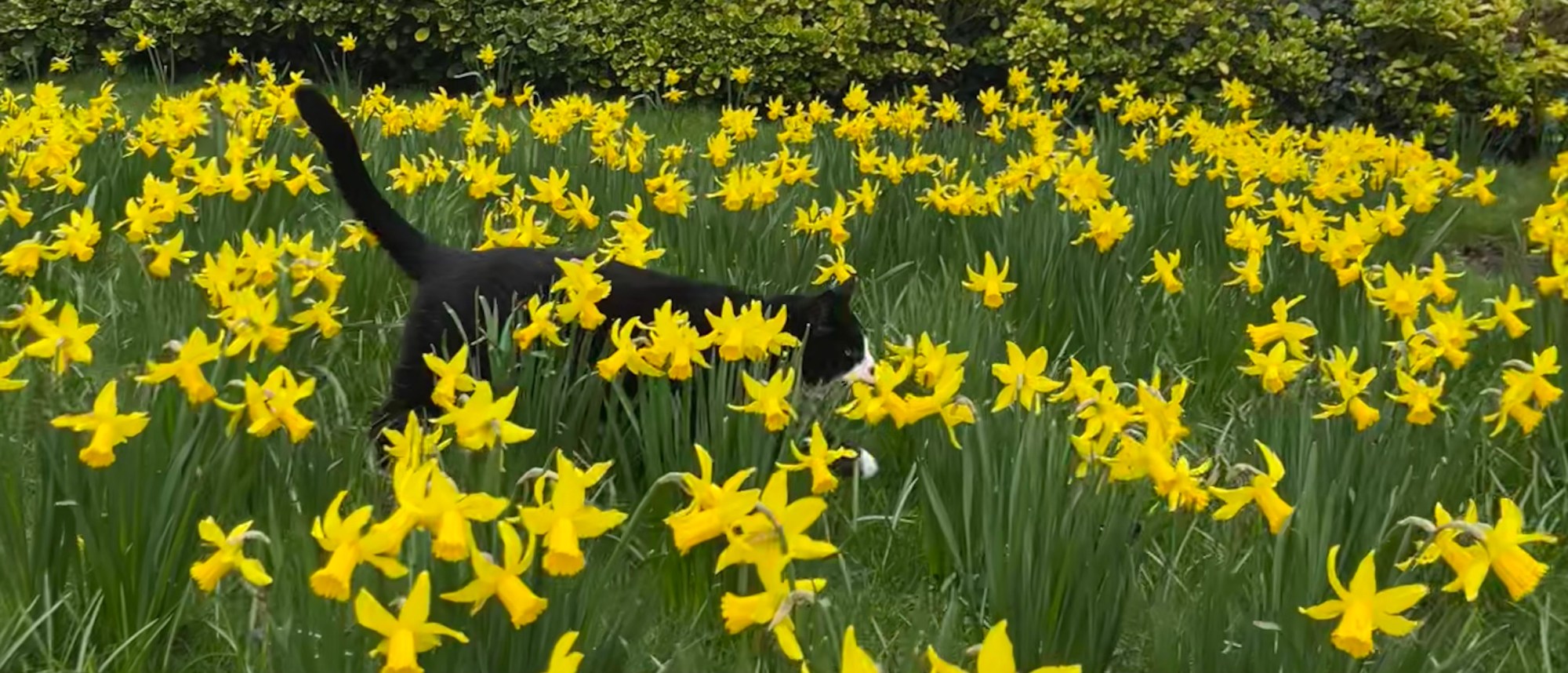
I learned a new word this week – phenology – the study of plant and animal life cycles and their relationship to weather and climate.
All around us spring appears to have sprung – the daffodils have been out for a number of weeks, as have the crocuses; and this week the birds are singing a new kind of song and the magnolia trees have even begun to open their blossoms. I also saw two yellow butterflies on Wednesday along with a rare sighting of the sun.
Yet it’s still only February… Spring doesn’t officially start until the 20 March… According to the astronomical calendar in any case.
But phenologically, I can declare it is officially spring! This definition of spring is based on the behaviour of the plants and animals in response to the weather and climate (helpfully explained by The Royal Museum of Greenwich). And they – the plants and animals that is – have spoken!
It couldn’t have come any sooner as far as I’m concerned… Although I write this today on another grey, drizzly day! Yes, we Brits do love to talk of the weather, but no more so than this week, because we’ve had a taste of sunshine after all the rain of the last two months. Which has been relentless. According to The Met Office it has been the wettest start for many in years. And don’t we know it.
Another word that I love is – apricity – it means the warmth of the winter sun. And I felt it on my face on Wednesday… astronomically only of course, as let’s not forget, according to nature, we’re now officially in spring!
I’ve been reminded this week of a poem that I wrote this time last year as we entered spring…
As part of the creative writing course I was doing, we were given a prompt for homework, which was to write an unpredictable poem about spring.
We did the cliched version in the classroom. I’ve just dug out my notes and here it is…
Predictable Spring
As I awaken to the sounds of spring,
I think of all the season brings,
The pretty colours, yellow, blue and white,
That conjures up feelings of delight.
The changing season promises so much,
Hope, sunshine, joy, birdsong, flowers, all lush,
A symbol of birth, green shoots, lambs, ducklings,
Warmth, blue skies, longer days, good mornings.
My home about an unpredictable poem is as follows:
Seasonal Comparison Disorder
Spring, my shadow, I envy you,
Waking up, ready to excite,
While you step out, fresh and pert,
I’m feeling old, tired, all dried up,
I just long to be young again.
Summer, my shadow, I envy you,
Confident, charming, full of cheer,
While you enjoy long days, light nights,
I’m feeling cold, weak, lonely,
I just long to be warm again.
Autumn, my shadow, I envy you,
Full of wisdom, dappled in colourful hues,
While you enjoy slow, languid days,
I’m feeling the pressure of push and pull,
I just long to be lazy and mindful.
Winter, my shadow, I envy you,
Hunkered down, in a deep sleep,
While you rest, dream, and recharge,
I’m sweating the long days, short nights
I just long for it all to stop, it’s too much.
Whatever season, wherever you are,
Life always appears better over there,
So natural to compare, even in nature,
But that’s life’s lesson, no rhyme or reason…
Life is unfair, disordered, even its seasons.
Given the homework brief to do something unconventional and unpredictable, I used the seasons as a metaphor and mirror to explore something deeper – how comparison can distort our experience, whoever we are and at whatever stage of life we’re at. And, of course, there’s the subtle link to Seasonal Affective Disorder (SAD) too, which is a type of depression, and according to the Royal College of Psychiatrists, affects around 3 in every 100 people in the UK.
So, what is it we can learn from nature if only we look and listen?
Perhaps the real lesson in phenology is not simply that spring sometimes arrives earlier than the astronomical calendar date, but that nature responds – intelligently and instinctively – to the conditions it is given.
The magnolia does not compare itself to the crocus, nor does the daffodil resent a late frost. Winter does not apologise for its darkness, it simply waits, conserves and restores. Each season expresses what it is designed to express, in its own time.
And yet we humans so often resist our own seasons. We compare our winter to someone else’s summer. We judge our quieter seasons as unproductive. We interpret our need for rest as weakness rather than what nature is nudging us to. In doing so, we create this internal friction, a subtle but insidious dissatisfaction with where (and who) we actually are.
Perhaps being human and being well (wellbeing) is not about pursuing a perpetual spring – endless growth, energy and positivity – but about developing the awareness to recognise which season we are in – be it physically, emotionally, and even hormonally – and responding with appropriate compassion and intention.
There are times to expand and times to conserve, times to begin again and times to let go. Phenology tells us that things happen – not because of a date in the diary – but through intelligence and instinct, if only we choose to listen in and trust ourselves.
Nature adapts. It adjusts. It responds. And perhaps our health, and our happiness, depend on our openness to do the same – to respond to the season we are actually in, rather than the one someone else is experiencing or expecting of us.
Happy Friday! x
 Not The Mayo Clinic