This week has been Mental Health Awareness Week – with the theme of Taking Action. I’ve been delivering a number of POINT3 wellbeing talks on mental health: what it is and isn’t, how stress impacts our mental health, and science-backed ways to support it on an ongoing basis.
So, I thought I’d share a subject I’m particularly passionate about, in line with the ‘Taking Action’ theme set by the Mental Health Foundation – who rightly say there’s no awareness without action.
Most of us are aware of our mental health – whether it’s in a good place or a not so good place. That said, in the training we deliver, we often hear there’s a gap between awareness and action. So, what can we do to bridge that gap – little and often and consistently? Because that’s the secret to finding balance and keeping our mental health in a more balanced state, more often than not.
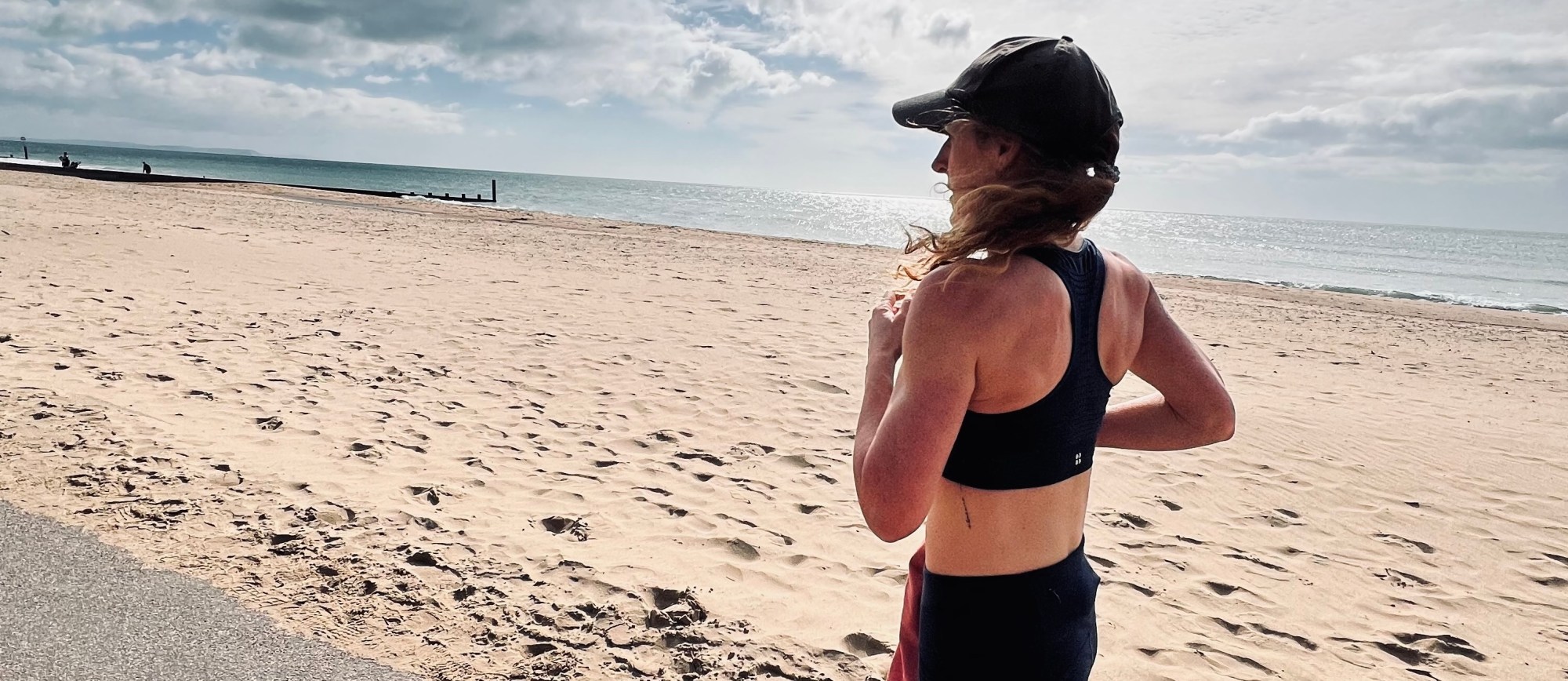
Those of you who know me and have been following my posts on Not The Mayo Clinic will know how important movement is for me. I use the word movement purposefully, instead of exercise. You can read more on this in one of my earlier posts this year.
While many of us associate movement more with physical health – a healthy heart, bones, muscles and joints – the impact on mental health and brain health is just as important, and perhaps overlooked or underestimated.
Movement is the fastest and one of the most effective ways to manage stress, which in turn helps us manage our mental health. It’s been my go-to stress-busting tool for about 20 years now.
So, I want to share some of the fascinating facts around movement and its impact on our mental health, particularly through the lens of managing stress, and through the DOSE framework of neurochemicals – dopamine, oxytocin, serotonin and endorphins. And also to share some ways we can all move more, even if we don’t like the idea of movement!
What happens in your brain when you move
Even the simplest movement provides an immediate reset for your mood and brain chemistry. New research shows that when you contract any muscle in your body – for as little as 60 seconds – muscles secrete small proteins called myokines into the bloodstream. Doctors have taken to calling these “hope molecules.” They travel to the brain, cross the blood-brain barrier, and act as a natural antidepressant.
Micro moments count. You don’t need an hour in the gym.
Movement also stimulates all four of the DOSE neurochemicals – the “happy hormones” – each of which plays a role in how we feel day to day:
- Dopamine: running, lifting weights, working towards a fitness goal
- Oxytocin: walking with others, moving in nature
- Serotonin: walking outside, especially in sunlight
- Endorphins: running, dancing, stretching
Poor mental health isn’t always the result of a specific trauma or experience. Sometimes it’s the result of a deficit of these neurochemicals in the brain. Which means that if we can engage in activity that’s known to produce them, we can actively support our mental health.
Movement also stimulates neurogenesis – the brain’s ability to form new neurons and neural connections – particularly in the hippocampus (memory and learning) and the prefrontal cortex (attention, creativity, problem-solving). Moving your body literally changes the structure of your brain. Which is why it’s considered an important protective-tool against dementia.
The stress response cycle – and why movement completes it
Here’s a piece of science I find particularly powerful, drawn from Burnout by Amelia and Emily Nagoski.
The stress response cycle is a biological process with a beginning, middle and end. We enter it when we’re triggered by a stressor – a looming deadline, a difficult conversation, an overflowing inbox. Our body doesn’t really distinguish between a modern stressor and a predator on the savannah. It responds the same way: fight, flight or freeze.
Here’s the bit that I found most interesting. The cycle doesn’t end when the stressor goes away. It ends when we consciously complete it – when we signal to our body that we’re safe.
For our ancestors, movement was that signal. Running from the lion was completing the cycle. They’d arrive back at the village, take a deep breath, embrace their people, recount the story. Each of those cues told the body: we’re safe now.
Today, we enter multiple stress tunnels throughout the day – and rarely tell our bodies we’ve come out the other side. The stress just builds. This is what can, over time, lead to burnout or more serious mental health difficulties.
The fastest way to complete the stress response cycle? Move. It’s the most direct signal we can send our bodies that the danger has passed. Think about it – Fight or Flight – they have movement built into those actions.
The art of building movement into your life
Knowing the science is one thing. Doing something with it is another — and this is where I think the real skill lies.
Movement doesn’t have to mean formal exercise. In fact, I’d argue that framing it as exercise is part of what puts people off. Not everyone likes the idea of exercising. Many have been put off at school or feel self-conscious at the gym.
So, for those that find themselves in this camp, take inspiration from the Blue Zones – the five regions around the world (from Japan to Sardinia to Greece) where people regularly live into their hundreds with remarkable vitality. What they have in common isn’t gym memberships. It’s low-intensity movement woven into every part of their day: gardening, kneading bread, cooking, walking, dancing. They move naturally, every 20 minutes or so, as a way of life.
We can all learn from that. The art of movement is choosing, where we can, not to outsource our physical effort – and finding small, natural moments to move our bodies throughout the day.
Here are some of the simplest ways to start:
- Move first thing – even a short morning walk wakes the body and, with sunlight, helps regulate your natural circadian rhythm (with other benefits for our mental and physical health)
- Reframe household chores – cleaning, gardening and cooking all count
- Use dead waiting time – my cue walking up and down a train platform while waiting for the train or chasing the bus (trying to get to the next bus stop before it arrives)
- Stretch in your chair every 20 minutes – especially if you’re trying to focus and be productive
- Take the stairs, walk the escalator – lots of little builds to a lot across a day
- Swap one Zoom call for a walking phone call – fresh air, connection, and research shows walking actually helps people open up and think more creatively
- Take the long route – park furthest from the entrance at the supermarket, get off the bus two stops early, build the detour in
Where are you getting your daily DOSE?
I find it useful to think about this as a daily question…
Not every day needs to look the same. Although consistency and routine is helpful and makes healthy habits easier to stick to. The point isn’t to strive for perfection – have compassion towards yourself, especially when motivation it’s harder to find.
If you’re going through a tough time mentally, I want to acknowledge that movement can feel impossible. And that’s okay. If you’re in a depressive episode or experiencing severe low mood, please be gentle with yourself first. It’s always recommended (although I acknowledge a difficult step) to speak to your doctor. And if you can find any way to move – even just a minute – those hope molecules are still being released. The body hasn’t forgotten how to respond; sometimes it just needs a gentle reminder. Interestingly, the NHS now also prescribes movement as a treatment pathway for those experiencing mild depression.
Movement and mental health go hand-in-hand. Building more movement into your day is a blend of art and science. And without oversimplifying it – find movement that brings you a little joy. Move to music. Move with friends. Move outside. Move in any way your body can.
Little and often. If it’s good enough for the Blue Zones… 🙂
Further reading
I’d recommend checking out – The Joy of Movement (Kelly McGonigal), Exercised (Daniel Lieberman), The DOSE Effect (TJ Power), and Burnout (Amelia & Emily Nagoski).
And if you’re looking for resources around mental health support, check out POINT3’s resources page. We also have other resources to help you get moving little and often.
Happy Friday, take care of yourselves and each other x

