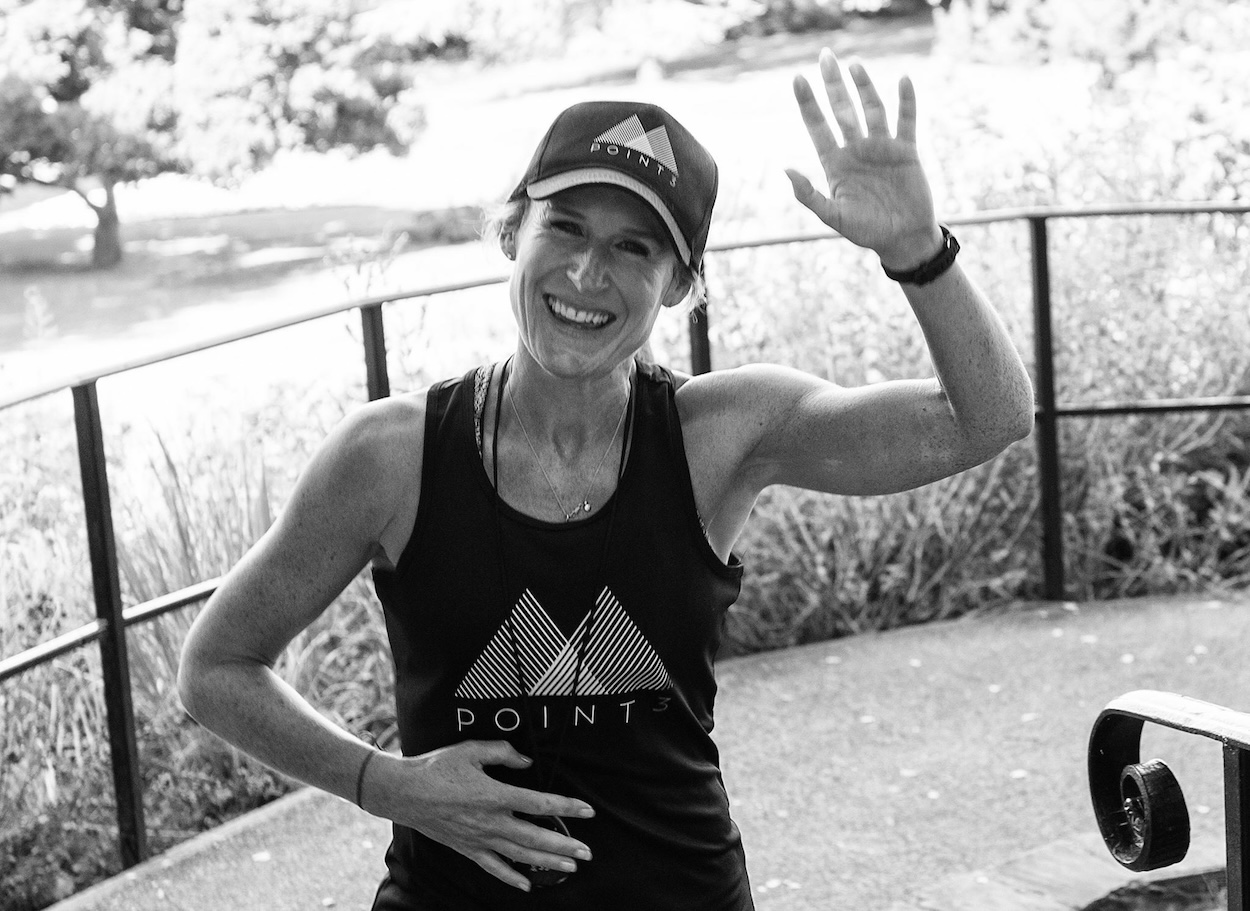
Last time I wrote about how movement supports (my) mental health and wellbeing. But I haven’t always known this… It’s really only over the last 8 years, since founding POINT3 Wellbeing, that the connection between movement and mental health has become truly clear to me.
This got me thinking about my motivation to move before and how this has changed over my life… I’ve been thinking about this a lot recently as you need motivation more than knowledge to actually change behaviours. But new research suggests it goes even deeper than motivation and knowledge.
Let’s face it, we all know that movement is good for us, but as we hear often, “I know I should move more but…” It’s hard to actually put that knowledge into practice – for many reasons – be it life itself getting in the way, lack of time, confidence, and motivation.
Added to which, there’s compelling research emerging around the idea that a women’s relationship to movement in midlife and later life is deeply shaped by their experiences as girls – from PE, to the playground, dance classes, sport, and family life, not to mention body image, and socio-cultural expectations too. This suggests the issue for women isn’t just motivation or knowledge, but the relationship we develop with movement throughout our lives.
When you look at the data, the picture is concerning.
Vitality published a report at the end of 2024 which found that only 23% of UK women are meeting aerobic activity guidelines. (The WHO recommends just 150 minutes of moderate intensity movement each week – which in itself isn’t very much.)
And when strength training is considered – which is particularly important for women from midlife onwards because of bone density, muscle loss and menopause-related changes – according to the 2021 Health Survey for England, only 29% of women met the recommended guidelines.
The Vitality report is fascinating when it comes to reasons why people exercise, and I can relate to different aspects of the findings as I consider my own personal experience through life.
Vitality’s report findings:
41% of women said that weight management was their main motivator for being active and the biggest perceived risk to not exercising. Women were found to neglect the significant broader benefits of exercising, with only 26% of women being motivated by the mental health benefits and 12% being motivated by increased muscle mass and strength.
Unsurprisingly, a staggering 82% of women reported a lack of motivation and 65% reported a lack of enjoyment. It suggests that many women’s experiences of physical activity and sport may be contributing to a narrow and often unsustainable relationship with exercise.
Women also report not knowing what type of exercise is beneficial for them at different times in their lives, with over half of women agreeing with this statement. Only 9% of women strongly agree that they feel informed about this.
Movement hasn’t always been a daily non-negotiable for me. Reflecting back, I was lucky growing up that sport was simply part of school life. I was active – whether I wanted to be or not. I enjoyed it – I played squash, hockey, lacrosse, tennis, I ran. And my parents were also good role models – keeping active, and taking part in marathons for their 40th birthdays. Being active was the norm for me from an early age.
But if I think back to my 20s – whilst I did still run and go to the gym – I was much more inconsistent and not nearly as disciplined as I am now. Perhaps I was rebelling against my school years, but at that point in life I was far more interested in other things – socialising definitely took precedence over fitness!
It wasn’t until I hit my 30s and was going through divorce that movement took on greater meaning for me. It was an outlet, a distraction and a (sometimes unhealthy) coping strategy, as I talked about here.
If I really think about what was driving me in my early 30s to move more regularly, it was primarily driven by wanting to feel better about the way that I looked. I had gradually put on weight throughout my 20s – all the drinking, eating out – much of that through work as well as my lifestyle – had started to catch up with me. I wasn’t comfortable with how I looked and how I felt in my clothes. Gradually over many years, through consistency and exercising regularly – through my running and marathon training – I lost the extra weight I had been carrying.
I used the word unhealthy in brackets above when I was describing my movement as a coping strategy… Because I feel it’s important to acknowledge that at times I did overexercise. Particularly as I was hitting 40 – I became a bit too obsessive about exercise. There was a time that I did Barry’s Bootcamp every day for a month which I don’t believe was good for me. And I would regularly do their Hell Week – again, I think this was too much of one type of exercise. I would come out of a class and would feel sick or even cry in the shower, it was so tough. I secretly carried that as a badge of honour.
Why am I sharing this? I think it’s really important to understand our motivation for movement… And yes, it is a healthy coping strategy, until it isn’t. It’s all about understanding your why, and being really honest with yourself about that, and listening to your body and how you’re feeling.
Once I hit 40, I started asking myself how I could bring more balance into my life.. Into everything I did – my exercise, my work, my relationships, my wellbeing… That’s when we (Nicky, Siôn and I) started talking about setting up POINT3 Wellbeing… and as part of that I retrained as a Personal Trainer. I wanted to help others to move more and to have a better relationship with exercise, to feel better about themselves and to improve their health and wellbeing. In the early days of POINT3, I led movement classes and talked about the benefits of movement. And I still do to this day, albeit we’re more in a classroom setting and no longer in lycra!
What I’ve come to realise now as I approach 50, is that my relationship with movement has changed again.
Today, movement is much less about PBs and punishment.
Yes, how I look and feel is still a short term driver – I’d be lying if I didn’t say that. But I have a longer term goal – around longevity and vitality in my later years – in my 80s and 90s… Movement is now one part of a much bigger picture for me – alongside sleep, nutrition, relationships and overall wellbeing. You can read more about my motivations and goals as I approach 50 here.
And the older I get, the more variety I seem to need – I suppose that is the balance piece. Running still plays an important role in my life, but so does walking, strength training and more recently Yin Yoga.
Reading the Vitality report really made me reflect on how narrow many women’s relationship with movement can become. If we are only exercising to lose weight, it’s perhaps unsurprising that motivation becomes difficult to sustain long term. Especially when life gets busy, bodies change, hormones fluctuate and energy feels finite. I’m far more interested now in building a strong body that will support me through the next half of my life.
And perhaps this is where our earlier experiences matter more than we realise. If movement as girls felt joyful, freeing, social or empowering, maybe we are more likely to return to it throughout our lives. But if it felt exposing, punishing, embarrassing or tied to appearance, perhaps that shapes our relationship with it too.
I know for me, movement has represented many different things at different points in my life: discipline, escape, therapy, punishment, achievement, control, freedom, connection, joy. Sometimes all at once.
What I hope for all women now, is creating a healthier, more compassionate and sustainable relationship with movement. One that supports us physically and mentally, without becoming another pressure or another thing we feel we are failing at.
Because movement doesn’t have to mean marathon training, bootcamps or punishing gym sessions. It can be walking with a friend, stretching on the living room floor with Adriene and Benji, dancing in the kitchen, gardening, swimming in the sea, lifting weights, yoga, hiking or simply moving more throughout the day.
And perhaps the goal shifts as we get older too. Maybe it becomes less about exercising to look a certain way, and more about moving so that we can continue to fully live our lives. To stay well. To stay independent. To support our minds as much as our bodies. To keep doing the things we love for longer.
Not because we should move. But because we want to move.
Happy Friday! x

