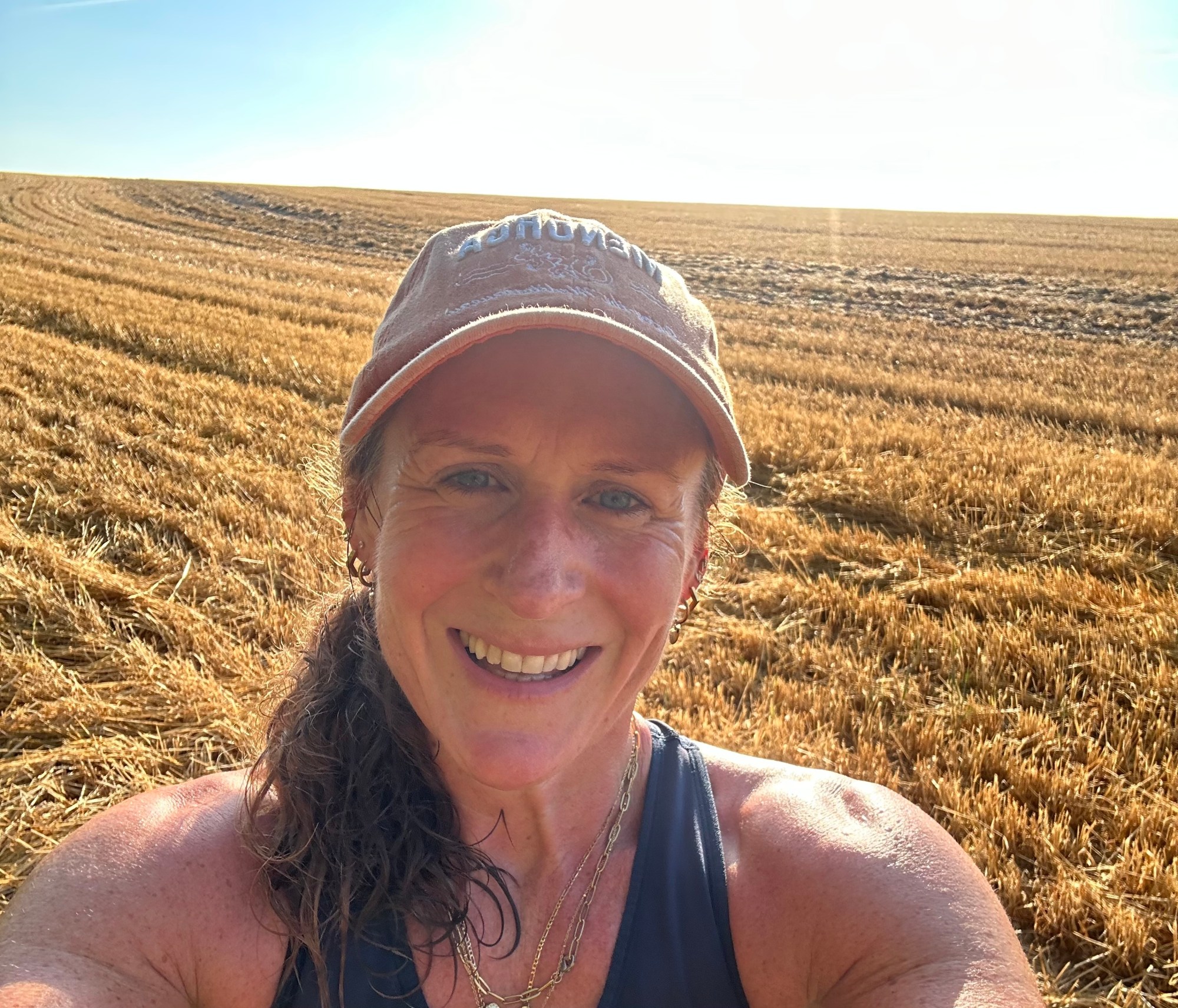
The New York Marathon is now 11 weeks’ away and I’m reflecting on the first 5 weeks of my training programme – “the rebuild” stage.
Here’s what I’ve achieved and what I’ve learned:
- I’m now confidently up to 9 miles on my longest run – building from a 3 mile base.
- It’s not taking over my life, and…
- I’m not injured!
I’ll take that! I have had to make adaptations though… and there have been some key learnings/reminders that I feel are worth capturing here:
- Less is more – Part of the “brief” when I was building my training plan was to include minimal running. Some might think that’s a bit odd, given I’m training for a marathon, but I wanted to see if it’s possible to train on two runs a week, and to keep my other strength and gym workouts similar to pre-training. And what I’ve seen so far is I don’t need to run more to get better at running. My two runs are both key runs – a long run, and another shorter run that alternates between hill repeats, intervals, and tempo runs. And so far, I’ve seen adaptations (although I’ve also had to adapt!). I feel stronger and am coping well with the increases in distance each week. So, less really can be more.
- Don’t be rigid – I’m pretty disciplined and love a plan, but what I’m learning is that yes it’s important to have a goal and a plan to get there, but it’s also important to be able to flex the plan. This is the metaphor of bamboo versus oak, being able to bend, so as not to risk breaking. I’ve had to make quite a few adaptations already. I’ve swapped out rowing for cycling once a week, because my lower back was not enjoying rowing – eek! And remember, not injuring myself is a key element of the overall goal! And I’ve had to miss a few other sessions due to work. But that’s okay, as I’m seeing progress on the running all the same, and in the most part I’m being consistent and getting the majority of the key training done. And I’m enjoying it too!
- Foundations are key – The way I’m training now is quite different to how I’ve trained previously for other big marathons – for example 10 years ago when I ran Paris Marathon for the first time. Then I was less focused on the foundational aspects of fitness and wellbeing – sleep, nutrition, hydration, rest and recovery. I imagine being older these aspects play an even more crucial role, as we have less tolerance and capacity to train when these fundamentals aren’t in place. But I now I have so much more knowledge in these areas and understand the impact they have on our physiology and performance. One example that I’ve really been focusing on is my pre-long run fuelling. I’m loving my overnight oats which is a new thing for me and they seem to be working.
- Trust your intuition, not just the data – ChatGPT has been my ‘coach’ through the training and has been helping me to analyse my key runs – looking at the data captured from my Apple Watch, but it has also been asking me key questions around how did it feel, on a scale of 1-10 how were my lungs, legs and energy throughout the runs? And I’ve been finding this aspect really reassuring. It’s tempting to outsource our analysis to our training to apps (even ChatGPT), when we’ve got a very good in-built gauge – simply how did it feel in your body and mind? Could you have gone on? I do like looking at the data – especially to check in on heart rate and pace, but I’m also tuning into my body much more than I’ve done before.
- Progress isn’t always linear – some runs and training sessions are going to feel rubbish and that’s normal and okay. I read a really interesting blog in the week from Dr Stacy Sims which was really reassuring. It was about the rule of thirds which she attributes to the Olympian Alexi Pappas: “Across a full training block, you can expect to feel good about a third of the time, okay a third of the time, and flat-out terrible the last third. Good, okay, and bad, in roughly equal measure.” This she goes on to explain is what a body – under load – actually experiences. And that’s been really helpful for me to read because I, like many I imagine, set myself high expectations to feel strong in every session. And as we get older – recovery takes longer, our nervous system takes longer to settle, and hormonal shifts also impact recovery and therefore our performance session to session. We don’t have as much resilience as we did in our 30s.
All in all, I’m feeling much more confident than I was at the beginning of training 5 weeks ago. I’m enjoying the process. I’m not letting it take over my life. I’m not feeling exhausted all of the time. And if I look back (at the gain) rather than forward (to the gap) of doing the marathon in 11 weeks time, I’m feeling really encouraged and excited.
Reading back through these five takeaways, I feel these can be applied to any goal or plan – physical or not. Training for a marathon is a great metaphor for life. It’s going to be up and down, it’s not going to go according to plan, it’s going to hurt at times, and that’s unfortunately part of the process! The sooner we can accept this, the more life (and the training) will not disappoint.
Happy Friday! x

